
 kirkusreviews.com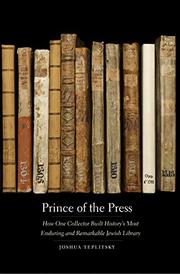
One man’s vast library provides a glimpse into the era of early
modern Judaism.
In his debut book, Teplitsky (History/Stony Brook Univ.)
explores the extraordinary personal library of Rabbi David Oppenheim
(1664-1736), one of the most important Jewish leaders of his day. Through his
examination of this library, the author touches on a number of topics: Jewish
learning and hierarchy of the times, the place of Jews in early modern Europe,
and, more broadly, the importance of books and the passion behind collecting.
Oppenheim, chief rabbi of Prague and scion to one of central Europe’s most
influential Jewish families, began deliberately collecting books and other
printed materials in Hebrew and Yiddish at an early age. By the height of his
influence, the library he had amassed represented the largest collection of
Judaica in existence, serving as a storehouse of intellectual, political, and
religious power. Teplitsky makes clear that books in the late-17th and
early-18th centuries were revered objects, “never free of their status as a
store of value, nor were they empty of sentimental and even metaphysical
power.” This respect for published works accorded Oppenheim additional status
and power in his role. “Oppenheim’s library,” writes the author, “offered him a
means to assert superiority over his rabbinic colleagues on account of his
ability to marshal and manage an ever-growing body of documentation and
knowledge.” Despite the respect he received, Oppenheim found himself embroiled
in controversies with Catholic authorities over his role in helping publish
Jewish works as well as the authority with which he acted in his own community,
in a time and place where Jewish nationality was questioned and threatened with
regularity. Finally, Teplitsky explores the meaning of the library as a symbol
of Judaism itself, a collection that represents diaspora; in the end, it was
purchased away from the Jewish community to be housed at the Bodleian Library
of Oxford.
A fascinating story of a unique book collector, worthy of
attention by scholars and lay readers alike.





Add comment