
 kirkusreviews.com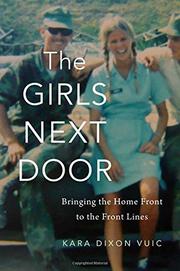
A military historian examines women’s volunteer efforts to
support American troops.
An adviser to a PBS documentary on the United Service
Organizations, Vuic (War, Conflict, and Society/Texas Christian Univ.; The
Routledge History of Gender, War, and the U.S. Military, 2017, etc.)
draws on extensive archival sources to create a thoroughly documented,
anecdote-filled history of women’s roles as recreation program volunteers from
World War I to the present. Besides illuminating women’s significance in
military life, the author chronicles changes in assumptions about gender,
sexuality, and race in American culture for the last 100 years. Under the
auspices of the Red Cross, the USO, and the military’s Special Services, young
women worked on bases and battlefields “to distract lonely men from war’s
boredom and brutality,” serving as “representations of ideal femininity and
womanhood, and as reminders of the civilian and domestic life to which the men
would return.” Preferred volunteers were college-educated, attractive,
vivacious, and independent, eager for the adventure of an overseas assignment.
Above all, they needed “to embody a particular kind of middle-American
wholesomeness” that would contrast favorably with scantily clad USO performers
and “exotic, sexualized native women” such as prostitutes, who thronged around
military bases. Volunteers cooked, handed out doughnuts, and danced with
servicemen; however, they were warned, romance and sex were not in their job
description. During the Vietnam War, the Red Cross rotated women often during
their tour to keep them from becoming too close to soldiers. Some volunteers
chafed at restrictions, which included living behind barbed-wire fences,
obeying curfews, and never leaving camp alone. In 1973, the transition from
conscription to the All-Volunteer Force meant that more families accompanied
servicemen and servicewomen, changing the volunteers’ role from being
“wholesome symbols of desire” to offering programs such as community centers
and summer day camp. Still, even with increasing numbers of servicewomen,
officials continued to sanction “hypersexualized entertainment,” evidence of
the “conflicting, yet intertwined ways” that women have been used by the
military.
A fresh contribution to women’s history.






Add comment