
 kirkusreviews.com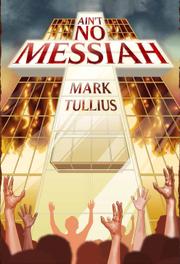
In Tullius’ (Unlocking the Cage, 2017, etc.) first book of a planned series, a
young man must decide whether to submit to his hellfire-preaching father’s
plans for him.
Joshua Campbell nearly died at birth,
but he rallied right after his father, Charles, promised that the infant would
grow up to be God’s servant at their South Carolina commune. Joshua has been
extraordinarily lucky ever since, walking away from numerous crashes and
explosions unharmed. For Charles, the author of a book called The Lost
Gospels and founder of The Church of His Son, every close shave is further
proof that his son is a second Christ, come to judge the world. Last time, the
“Messiah was weak,” Charles declares, and his new gospel is one of violent
vengeance. As Joshua grows into a man, he prays for the world’s sins but
struggles with his love of pop culture, alcohol, and women. His longtime friend
Jeremy Ludlow draws him into a sleazy underworld of drugs and sex, but Joshua
also gets a chance at traditional family life after he marries Jeremy’s sister,
Danielle, and they have a daughter, Lily. Meanwhile, Charles, in cahoots with
conservative senator and president-elect Burkhart, engineers a devastating scheme
to fulfill his own prophecies. It all leads to a climactic, Quentin Tarantino–esque
finale in which Joshua delivers a televised speech. Tullius crafts a plausible
conspiracy plot in this novel, and he shrewdly reveals the dangers of relying
on social media reaction as a sign of success, as in scenes of Joshua popping
pain pills and swigging whiskey on the 47th floor of the church’s opulent new
complex in Las Vegas, awaiting the results of a “Messiah vote.” It also offers
a convincing depiction of an unholy partnership between politics and religion; The
Church of His Son, for example, is portrayed as being part business and part theatre.
However, there’s an unpleasantly macho feel to the novel, with its gratuitously
pornographic scenes and the fact that most of the female characters serve only
as objects of male fantasy.
A compelling, if sometimes-lurid,
picture of a faith gone wrong.



Add comment