
 kirkusreviews.com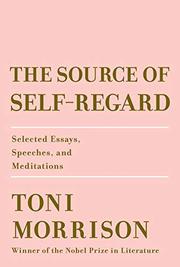
Brilliantly incisive essays, speeches, and meditations
considering race, power, identity, and art.
A prominent public intellectual even before being awarded the
Nobel Prize in Literature in 1993, novelist Morrison (Emerita,
Humanities/Princeton Univ.; The Origin of Others, 2017, etc.) has
lectured and written about urgent social and cultural matters for more than
four decades. Her latest collection gathers more than 40 pieces (including her
Nobel lecture), revealing the passion, compassion, and profound humanity that
distinguish her writing. Freedom, dignity, and responsibility recur as salient
issues. Speaking to the Sarah Lawrence graduating class in 1988, Morrison urges
her listeners to go beyond “an intelligent encounter with problem-solving” to
engage in dreaming. “Not the activity of the sleeping brain, but rather the
activity of a wakened, alert one” that can foster empathy—a sense of intimacy
that “should precede our decision-making, our cause-mongering, our action.” To
graduates of Barnard in 1979 she recasts the fairy tale of “Cinderella,” focusing
on the women who exploit and oppress the heroine, to urge her audience to “pay
as much attention to our nurturing sensibilities as to our ambition.” “In
wielding the power that is deservedly yours,” she adds, “don’t permit it to
enslave your stepsisters.” In an adroit—and chillingly prescient—political
critique published in the Nation in 1995, she warns of the
complicity between racism and fascism, perceiving a culture where fear, denial,
and complacency prevail and where “our intelligence [is] sloganized, our
strength downsized, our privacy auctioned.” “Fascism talks ideology,” she
writes, “but it is really just marketing—marketing for power.” Speaking at
Princeton in 1998, she considers the linguistic and moral challenges she faced
in writing Paradise, one of many pieces offering insights into
her fiction. Aiming to produce “race-specific race-free prose,” she confronted
the problem of writing about personal identity “in a language in which the
codes of racial hierarchy and disdain are deeply embedded”—as well as the
problem of writing about the intellectually complex idea of paradise “in an age
of theme parks.”
Powerful, highly compelling pieces from one of our greatest
writers.




Add comment