
 kirkusreviews.com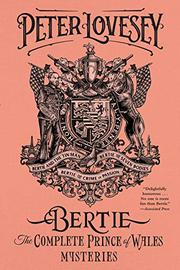
In the absence of a brand-new mystery starring England’s most
unlikely sleuth, His Royal Highness Albert Edward, Prince of Wales, Lovesey (Beau
Death, 2017, etc.) supplies the next-best thing: a collection of Bertie’s
three earlier appearances, originally published between 1987 and 1993.
Lovesey’s brief but informative Introduction notes that the
first of these novels, Bertie and the Tin Man, was based on a
real-life mystery, the suicide of notable jockey Fred Archer, who shot himself
at the height of his career after asking his sister, “Are they coming?” The
Prince of Wales, who takes a keen interest in horseracing, to the extent that
his interest in anything can be described as keen, takes it upon himself to
figure out why Archer would have killed himself. Though the results of his
endeavors wouldn’t have encouraged most amateur sleuths, Bertie returns
in Bertie and the Seven Bodies, a case that takes its model not from real life but
from Agatha Christie’s interest in using nursery rhymes to structure her
celebrated mysteries. Invited to Desborough Hall for a week of hunting, Bertie
can’t help noticing that his fellow guests are being picked off at the rate of
one a day following a nursery rhyme his wife, the long-suffering Princess
Alexandra, points out to him. Lovesey makes Bertie come across as earnest and
obtuse enough to keep the police away from Desborough while he produces a
series of solutions that are proved hilariously wrong day after day. Bertie
and the Crime of Passion finds Bertie in Paris, where legendary actress
Sarah Bernhardt serves as his sidekick as he applies his unique skills to the
riddle of who shot the fiance of an old friend’s daughter as he was dancing in
a crowd of hundreds on the floor of the Moulin Rouge.
For all Lovesey’s ingenuity, the deepest pleasures here involve
not the plotting—two of the three cases turn on the same well-worn red
herring—but the charmingly invincible obtuseness of his narrator/sleuth, who
remains as winning a loser now as he was 30 years ago.






Add comment