
 kirkusreviews.com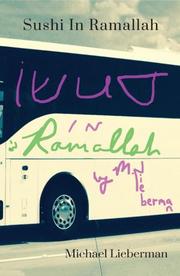
An American Jew travels to Israel as
part of a sponsored tour in this debut farcical comedy.
Adam Solomon has seen better days—he
just got kicked out of law school; he’s on the outs with his grandfather after
he quits a family enterprise; and he’s about to embark on a trip to Israel as
part of The Sababa Project, an excursion designed to entice American Jews to
fall in love with their spiritual homeland. As Momo Kafritz, the eccentric
millionaire who “operates the largest America-to-Israel travel organization in
the world,” explains, home can only be defined by love, and in this case, “JEWISH LOVE” is the only kind that
really counts. Lieberman manages a satirical punchline in nearly every
sentence—his group of travel companions is largely interested in maniacal drug
and alcohol consumption and the relentless pursuit of casual sex. Adam has his
own trysts—he quickly romances Liora, the disaffected daughter of Momo, and
Sarai, a DJ grieving over the recent loss of her child’s father. Only armed
with “broken, badly sprained Hebrew,” Adam obsessively tries to track down a
high-tech ambulance his family’s philanthropic organization donated—it was his
idea, though he received no credit for it—which seems to have been turned into
a heavily armored tactical vehicle. Meanwhile, his sassy bus mate, Caitlin
Cohen—from the vehicle, she catcalls Israeli soldiers, “Let’s make Saba-babies
together!”—tries to find some passable sushi, a search that takes her to the
dangerous occupied territory.
The author’s plot is frenetically
paced and comically manic—he describes Adam’s travel mates as a “group whose
babka-toting mothers have reared them on a steady diet of nerves and anxiety.”
And when Adam is asked whether his own mom is “a Jewish mother,” he responds: “She loves mah-jongg and worrying
about stuff like that.” The strongest parts of the book deliver a lacerating
irreverence—Lieberman is unafraid of caricaturing even the most sacred pieties,
a tendency that is tantalizingly transgressive. In this regard, his novel, at
its best, is reminiscent of Céline and, more recently, Paul Beatty. In
addition, Lieberman succeeds, within the indefatigable absurdity, to raise some
serious questions about the elusive nature of identity for a diaspora, and the
split between secular Jews and orthodox religious adherents. But in place of a
coherent plot, the author supplies a meandering road trip, and that narrative
shiftlessness can be exhausting. Moreover, he bombards readers with a swarm of
one-liners, and that too becomes more tedious than comical; the jokes
themselves are often silly rather than clever. For example: “I tried to go to
the bathroom but it was occupied,” a character named Eric starts. “JUST LIKE THE
TERRITORIES!” Apparently the exclamation mark isn’t enough to signal to readers
this is a joke—too much of the book is written in the heavy-handed spirit
suggested by that promiscuous capitalization.
A comically astute but often
overdone sendup of Jewish American culture.





Add comment