
 kirkusreviews.com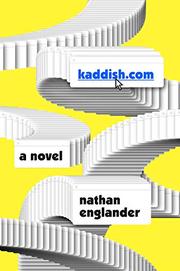
A lapsed Jew returns to the fold and becomes obsessed with
redeeming a spiritual mistake made 20 years earlier.
When Larry’s father dies, he must travel from Brooklyn to his
sister Dina’s house in Memphis, Tennessee, to sit shiva in the style of the
Orthodox community from which he has vigorously removed himself. “The
second day of shiva is even harder than the first….He lets himself be
small-talked and well-wished, nodding politely….One after another, he
receives the pathologically tone-deaf tales of everyone else’s dead
parents….Larry wants to say, in response, ‘Thanks for sharing, and fuck your
dead dad.’ ” As his sister and her rabbi clearly understand, there is no
way, no how this guy will fulfill his duty as his father’s only son to recite
the mourner’s kaddish daily for 11 months. But without it, his father will be
“gathering wood for his own fire” in the World to Come. As a last
resort, the rabbi explains that he can find a proxy to do it for him. So Larry
does, hitting upon a website that provides just this service at Kaddish.com,
“a JDate for the dead.” Then, a week or two after the contract ends,
Larry receives a note from Chemi, the yeshiva boy with whom he was matched. It
includes a photo that somehow shakes loose in Larry all his grief for his
father and himself. It leads him to change his life and his name; frankly, the
person he becomes, whom we encounter two decades later, seems to have nothing
in common with the original Larry. Incidents in his new life lead to his
determination to find a way to atone for his long-ago shirking, no matter what
it costs in the present. From the title and the tone in the “Larry”
part of the book, Englander’s (Dinner at the Center of the Earth, 2017,
etc.) novel might seem to be a satire, but it ends up feeling more like a
straightforward, almost simplistic parable designed to teach a spiritual
lesson, one which takes very seriously Orthodox views of the soul and
afterlife. On the other hand, it contains what is certainly one of the weirdest
sex scenes ever found in a nice Jewish story.
Again, Englander demonstrates his skill at placing timeless
concerns of Judaism in sharply modern circumstances. This one feels oddly
preachy, though.




Add comment