
 kirkusreviews.com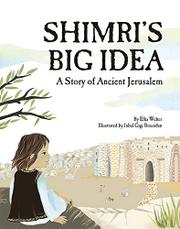
A boy saves the eighth-century B.C.E.
city of Jerusalem from invading Assyrians.
Shimri is the youngest in his family
and is always being told that he is too little for chores. Then, when he spills
water on the “breakfast table” he carefully observes that a human, in this case
his grandmother, can alter the course of the water. Accompanying his older
sister past the city walls to fill a water jug, he notices a “dark opening in a
large rock.” Back home, and again excluded from chores, he dances on the roof,
causing the house to shake. When he learns that the king wants to build a
tunnel to bring water inside the city walls, his grandmother encourages him to
tell the king about his great idea to exploit his found crack in the rock for
the building of this tunnel. Men making noise aboveground would guide builders
digging from either end to a connecting spot. And so it came to pass in Weber’s
version of a historical event. As written in 2 Chronicles 32:1-23, the
Assyrians were mounting a siege against the Judean king Hezekiah, and he wanted
to deny access to water outside the city to the invaders. Weber’s Jerusalem is
peaceful, almost idyllic, a mood reinforced by the colorfully appareled inhabitants
going about their daily activities as portrayed in Bousidan’s illustrations.
Children will appreciate seeing how
a boy with a keen eye helps to accomplish great things in this reimagining of
biblical history. (Picture book. 4-7)






Add comment