
 kirkusreviews.com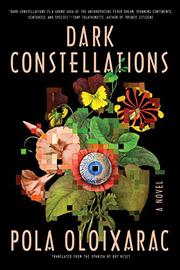
A 19th-century naturalist describes a mysterious substance
while, closer to the present day, a hacker comes of age and a government tracks
its citizens.
“We have to understand these things as dark constellations,”
says Max, a character in Oloixarac’s (Savage Theories, 2017) luminous
new novel. The Incas, he goes on, “organized the sky in terms of the dark
regions between stars, the interior shapes with bright parameters.” In this
dense, dizzying book, the Argentine “Ministry of Genetics” tracks the “life
trajectories” of its citizens by curating digital as well as biometric
data—fingerprints, face scans. Max heads a project to help sift that data. He
recruits Cassio, an old acquaintance from their rogue hacker days. Cassio is
the closest thing to a main character we have. Oloixarac’s novel proceeds along
three tracks; this one is the last and the most legible. Another traces
Cassio’s growth from a nerdy, overweight kid to a brilliant student and
phenomenal hacker. Yet another track begins in 1882, with a naturalist named
Niklas Bruun, who’s conducting research on a hallucinogenic substance that
appears to break down the barriers between one species and another. There isn’t
exactly a plot here. Oloixarac is interested in big data, and consciousness,
and the internet, and a government’s control over its citizenry. In Bruun’s
sections, the prose is lushly sinuous: “The meadows dissolved at the banks of
iridescent streams, and trees stood out like castles, lowering their branches
only to raise them again, lines of dense liquid vegetal matter uniting the
earth and sky.” When it’s Cassio’s turn, the prose lurches toward something
more cerebral, even cynical (“As far as Lara was concerned, sex with Cassio
would be a completely benign experience”). Oloixarac is a massive, mysterious
talent; her latest novel is an oblique puzzle whose pieces never quite fit into
place.
This genre-defying novel blends science fiction with cyberpunk
with naturalism to end up with something utterly original.





Add comment