
 kirkusreviews.com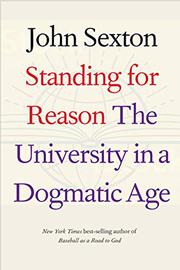
A forceful argument on behalf of the modern university.
Having established himself as a visionary when he was president
of NYU (2002-2015), Sexton (Baseball as a Road to God, 2013, etc.)
argues that a university that returns to basic principles and extends its
horizons offers a remedy to the madness of our current political discourse.
Well before he became a scholar of religion or a law school dean, the author
honed his analytical skills as a debater and debate coach, thriving in a
competitive arena in which he learned the importance of listening and carefully
considering opposing views in order to sharpen the response. It was an
exchange where “participants lived in a world of ideas and were committed to
testing their views.” In contemporary discourse, that world has been reduced to
memes and slogans, sacrificing nuance and complexity, and opposing views are
too often ridiculed or silenced rather than considered. We now live in a world
that suffers from what Sexton terms “secular dogmatism…a close-mindedness, or
lack of intellectual openness.” Universities, he maintains, “should serve
as incubators for a new secular ecumenism,” which does not merely accommodate a
variety of different political viewpoints and religious faiths, but embraces
the diversity of the world at large, reflecting an increasingly globalized
culture. In a time in which there are strong inclinations toward building walls
against such diversity, Sexton believes that higher education must re-establish
itself as a “ ‘sacred space’ for critical reflection” and “the meaningful
testing of ideas.” The university must be a space where rigorous debate and
intellectual exchange can flourish. The author shows how NYU has developed into
a global institution with international portal campuses, and he suggests that
higher education as a whole can be a powerful force for a better world.
Sexton clearly shows how less shouting and more listening can
lead to a reclaiming of a lost middle ground.




Add comment