
 kirkusreviews.com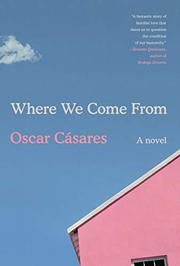
A Mexican-American family in Texas finds their home turned
into a way station for immigrants smuggled across the border.
Cásares (Amigoland, 2009, etc.) returns to his hometown of
Brownsville for a potent novel about the complexities of immigration and the
lies we tell ourselves and our families. Twelve-year-old Orly is from Houston,
has light skin, and speaks passable Spanish even though he strongly prefers
English and sometimes denies knowing Spanish at all. After his mother’s sudden
death, Orly is sent by his dad to spend the summer with his aunt Nina in
Brownsville. Unbeknownst to him, Nina has a small, pink casita in her
backyard being used by coyotes moving human cargo north. Neither Nina nor Orly
quite knows how they got into their situations. Orly’s brother is at camp, his
father is in Napa with a new girlfriend, and his mother’s absence is a gaping
hole so big he can’t see the other side. Just when Nina thinks she’s rid of the
smugglers for good, a young boy named Daniel knocks on her back door in the
middle of the night after narrowly escaping Immigration and Customs Enforcement.
Nina puts him up in the casita and now has to hide her secret from Orly, her elderly
mother, and her bossy brother. As Nina, Orly, and Daniel learn each other’s
secrets, the reader is treated to a novel that addresses the complexity of
immigration, identity, and assimilation while telling close, intimate stories.
The novel is told in a roaming third person that turns each character, no
matter how seemingly one-dimensional or minor, into a powerful presence. Each
voice in this chorus has something urgent to say. Cásares devotes a page or so
of italicized backstory to seemingly minor characters who would drift out of a
different novel without a second glance: a raspas vendor, a coyote quickly
arrested, a Brownsville police officer, Orly’s English teacher, and many more.
Whether it’s the teacher about to be deported, a man who doesn’t concern
himself with the fact that his own mother used to be undocumented, or the many
people making the dangerous crossing who are beset by tragedy, these asides all
reveal the sometimes-hidden yet always profound effects of immigration. Helping
us learn the truth about who we are individually and as a society is the
ultimate goal of this novel.
In some ways timely, this quiet, delicate book delivers a truly
timeless emotional punch.






Add comment