
 kirkusreviews.com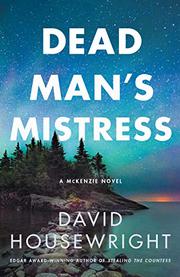
Unlicensed Twin Cities private eye Rushmore McKenzie gets an
object lesson in why successful American regionalist painters should drive more
carefully.
It’s been a generation since Randolph McInnis skidded from a
patch of ice to the ditch where he died and nearly that long since collectors
have learned that most of the 133 paintings and drawings in his Scenes from an Inland Sea series
depicted his assistant and muse, painter Louise Wykoff, often in intimate
poses. But Louise and Mary Ann McInnis haven’t spoken since then. Now Louise
confides in McKenzie that McInnis actually left behind 136 artworks, three of
which she secretly kept at his invitation. These three undocumented paintings
have been stolen, and Louise, who can’t afford to notify the police or, still
less, McInnis’ widow, wants McKenzie (Like to Die, 2018, etc.) to
retrieve them. Tracing a tea set and a pair of candlesticks also filched from
Louise’s house to David Montgomery, a handyman with an eye for the ladies,
McKenzie thinks, “It couldn’t possibly be this easy,” and the discovery of Montgomery’s
dead body perhaps an hour later proves him right. Even after he releases
McKenzie from a holding cell, Cook County Sheriff Bill Bowland stoutly
maintains against the evidence that Montgomery shot himself, and Deputy Peter
Wurzer broadly hints that he’d love to invite McKenzie back and work him over.
So it looks as if McKenzie will have to track down the paintings and fend off
the interference of wealthy collector Bruce Flonta and documentary filmmaker
Jeffery Mehren alone—except of course for Louise’s neighbor Peg Younghans,
Mehren’s daughter Jennica, and all the other unsuitable women who keep throwing
themselves at him.
Smooth, professional work whose mounting complications, from a
shooting in Canada to a secret auction for the missing canvases, are kept under
admirable control right up to the double-barreled denouement.






Add comment