
 kirkusreviews.com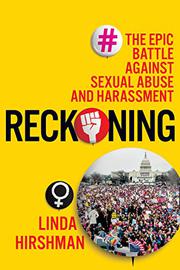
The social, cultural, and legal
battle against sexual harassment has raged for 50 years.
Drawing on interviews, histories,
and abundant news articles, Hirshman (Sisters in Law: How Sandra Day
O’Connor and Ruth Bader Ginsburg Went to the Supreme Court and Changed the
World, 2015, etc.) offers a savvy and well-informed history of women’s
decadeslong fight against sexual abuse and harassment from the 1960s, when
there was “no legal category for sexual harassment,” to the outburst of the
#MeToo and Time’s Up movements and the triumph of women candidates in the 2018
midterm elections. Catharine MacKinnon emerges as a driving force in the
struggle. As a Yale Law School student, she argued that sexual harassment was
discrimination, prohibited by the Civil Rights Act of 1964. At the time, legal
decisions in harassment cases were “motivated by a vision of women,
collectively, as inferior to their male counterparts and subject to their whims.”
In 1979, MacKinnon published her groundbreaking Sexual Harassment of
Working Women, which Hirshman praises as “a little book that started a big
war.” Hirshman’s inventory of crucial moments in women’s rights includes Anita
Hill’s testimony against Clarence Thomas before a judiciary committee chaired
by Joe Biden, who showed Hill no sympathy. Thomas’ confirmation spurred women
to enter—and win—political races in 1992, writes the author. But in sexual
matters, many feminists—including icon Gloria Steinem—argued for a liberal,
celebratory view of workplace sex, including sex between individuals of vastly
unequal power—such as Bill Clinton’s affair with intern Monica Lewinsky. By
defending her husband, Hillary Clinton herself, purportedly a human rights
advocate, “got to decide when the women in her husband’s sphere were political subjects,
with human rights.” The public conversation over sexual harassment was ignited
by websites like Bitch, Feministing, and Salon’s Broadsheet and by
the media’s coverage of issues such as date rape, the legal meaning of
“consent,” and suits against prominent and powerful men. Hashtag activism,
Hirshman asserts, allows women to be “literally inventors of their own
empowerment.”
A brisk, authoritative, and timely
history.




Add comment