
 kirkusreviews.com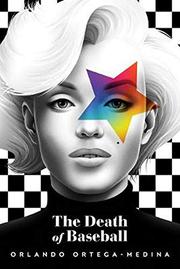
A psychological novel explores two
young men whose lives intersect in Los Angeles chaotically, emotionally,
sexually, and violently.
In the book’s opening section, readers
meet Clyde Koba, a second-generation Japanese-American and the narrator of the
first part of this tale. It is 1973, and he is about to celebrate his 11th
birthday. Before the night is over, his father comes home, abusively drunk as
usual. Clyde tries to hide and winds up accidentally stepping on his beloved
cat, breaking the feline’s back and killing him. Eventually, Clyde begins to
display a violent streak, and his issues with sexual identity grow more overt.
He becomes obsessed with Marilyn Monroe’s photographs and biography, convinced
her spirit has been reincarnated in his body. Then the story takes on a third-person
narrator and moves to another part of town, where 16-year-old Raphael Dweck has
decided he is finished with his court-mandated psychotherapy. Three years ago,
Raphael, a kleptomaniac, stole the silver breastplate of the Torah he had been
studying for his bar mitzvah. Born in Israel, the Orthodox, observant Raphael immigrated
to Los Angeles with his family eight years ago. But now his parents and rabbi
decide the teen must find salvation by returning to Israel and living with a
despised aunt. Ortega-Medina’s (Jerusalem Ablaze, 2017) graphic prose is
vivid, especially when describing the Israeli desert: “The orb of the sun spits
out swirls of colour as it dips westward, painting the purpling sky with reds
and oranges, and splashing the edges of the crater with an ever-changing
palette. Raphael…sketches furiously, trying to capture something of the
devolving landscape as the colours intensify, and a warm wind kicks up from the
desert floor.” The author’s deft construction of this complex plot reflects his
experience in creating short stories. He concentrates first on Clyde, then on
Raphael. Finally, the tale jumps ahead to 1982, several years after Raphael (now
Ralph) returned to California. The two men’s paths become intertwined as they
form a quirky, symbiotic relationship. Ralph, still searching for God, is the
more manipulative of these two psychologically fragile, fully developed
characters. Clyde, now cross-dressing as Monroe, is the more explosive and
physically dangerous one. Ralph tells Clyde: “We’re all messed up, in one way
or another. Every one of us. Damaged goods.” That could be this dark,
disturbing novel’s subtitle.
Finely textured character
development almost compensates for a depressing tale.




Add comment