
 kirkusreviews.com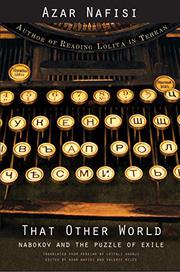
Essays on how the work of Vladimir Nabokov evoked the feelings
of alienation and loss that many experienced in post-revolutionary Iran.
When a “violent ideological totalitarian revolution” proclaimed
itself as the Islamic Republic of Iran, Nafisi (The Republic of Imagination:
America in Three Books, 2014, etc.) felt “in a perpetual state of exile”
from her beloved homeland. As a teacher and critic, she found in Nabokov a
clear articulation of those feelings. “For him,” she writes, “exile was not
just a physical migration,” but “a feeling of unreality, orphanhood,
isolation.” Her close readings, along with critical and biographical studies,
inform seven empathetic, incisive essays that together provide a sweeping
overview of Nabokov’s major works. Translated by Khonji and revised for this
publication in English, the essays predate, and contextualize, Nafisi’s
acclaimed memoir, Reading Lolita in Tehran (2003). Nabokov,
more than other authors she was reading and teaching, spoke to the “deep
traumatic and anguished existence” that pervaded life under a repressive
dictatorship. He was acutely sensitive “to bad literature, autocratic regimes,
and racial, ethnic, or religious prejudice.” In his two overtly “political
novels,” Invitation to a Beheading and Bend Sinister,
he represents totalitarianism as a mindset that believes it alone holds “a
monopoly on reality” to which all must defer, and in which all artistic
creativity and expressions of individuality are considered subversive and
dangerous. In confronting this tension between politics and art, Nabokov,
rather than depict totalitarianism’s destructive and “horrific reality,”
explored how “creative minds” perceive and “resist its onslaught.” Among other
works Nafisi examines are the parody Pnin, in which the main
character “can be considered a literary descendent of Quixote”; Pale
Fire; The Real Life of Sebastian Knight; and Ada (the
first of Nabokov’s novels that she read), which influenced her profoundly. The
novel, she writes, “did not merely portray quotidian realities—it articulated
the reader’s subjective realities.” In a sensitive, cleareyed reading of Lolita,
Nafisi sees the novel as more than a portrayal of obsession or parody of love but an inquiry into questions of individuality, personal liberty, and loss.
Graceful, discerning literary essays.



Add comment