
 kirkusreviews.com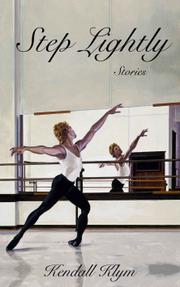
This debut collection of short
fiction by Klym, a former professional ballet dancer, explores the lives of
expert and novice dancers to reveal how the art form channels the power of
self-expression.
In a brief introduction, the author describes
his background as a dancer (he studied at New York City’s School of American
Ballet) and tries to articulate how dancing and composing stories intersect for
him: “When I write, I dance,” he states. He describes the relationship between
writer and reader as a partnership—one that’s aided by growing familiarity. In
“The Ballet Class,” an amateur ballerina in her 40s observes that her
classmates are a motley but lovable crew. In “The Belly Dance,” Karla, a woman faced
with a stalled marriage, turns to a belly dancing class, which teaches her the
moves that she needs to spark a new sexual rapport with her husband. As a
writer, Klym is clearly drawn to formal variance; as a result, these stories
feature braided narratives, bulleted lists, step-by-step guides, a faux product
disclaimer, and a dessert recipe. The author also freely uses section titles,
which provide crisp packaging for vignettes that, read quickly, create a sense
of swift movement through time and theme. The story “Pavlova,” for instance,
unfolds in newspaper clippings, diary entries, and a mysterious, aforementioned
recipe to tell the story of a dessert dish so potent that it summons the ghost
of its namesake—legendary Russian ballerina Anna Pavlova—and physically
transforms any dancer who eats it.
Klym has an accomplished command of narrative
voice. In “A Professional Male Ballet Dancer in Twelve Steps,” he succinctly
captures the tone and diction of a child: “your parents took the leaves you
collected and ironed them between pieces of waxed paper. You said you loved the
smell.” The book runs into trouble with its dialogue, however, which is often
too wooden and prosaic to seem believable: “You put body, mind, and soul into
the entire process,” Karla’s husband in “The Belly Dance” says, “but cooking
and eating are not the same thing as loving.” The author’s clear passion
for dance enlivens the 15 tales, but he sometimes bends over backward to coin
a new phrase that expresses its importance, as in the story “Origin”: “A state
of eloquence encased in a spark of spontaneity, Dance set the world in motion.”
Klym frequently mentions the difficulties that dancers face, such as stereotypes
regarding sexuality, problems of body image, and the physical and mental tolls
of performance and training. Despite this, some of the stories here lack any
tension at all. In “The Ballet Class,” for instance, the climax occurs when a character’s
ex-girlfriend unexpectedly shows up, but the end still fizzles. In “The Belly
Dance,” Karla lies in order to join a class for pregnant women, but this
complication never transforms into something interesting. And “Origin,” a
creation myth of cartoonish grandiosity, never allows readers to access the
emotion at its core.
An uneven set of tales but one with
plenty of bright spots.





Add comment