
 kirkusreviews.com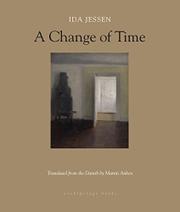
Even when it’s anticipated, a death in the family can leave
survivors on shaky, unfamiliar ground. At the same time, it can also offer them
a heady taste of independence, autonomy, and freedom.
At least that’s the case for the unnamed protagonist of Danish
author Jessen’s (The Children, 2012, etc.) latest award-winning novel,
in which readers are made privy to diary entries, the bulk of them beginning in
1927 when the diarist’s husband is in the hospital and continuing after he
dies. We get to experience the voyeuristic pleasure of becoming immersed in
someone else’s grief, self-discovery, and eventual reinvention. Over the course
of the entries, facts come to light and elucidate relevant details in the
22-year marriage between Vigand, a remote and humorless doctor who worked in
the small, quaint Danish village of Thyregod, and his wife, a former
schoolteacher. The diary reveals that its intelligent and spunky author had a
financially and socially comfortable existence with her husband, with each
party retaining a well-honed sense of self. This allowed them to periodically defy
social conventions—for example, the diarist was the first woman to ride a
bicycle around town—while simultaneously fitting squarely into the social mores
of their time and place. By any estimation, theirs was an intriguing, feminist
union. Nevertheless, after Vigand becomes ill and subsequently dies, his wife
faces a slew of decisions, not the least of them regarding where to live and
what to do with her time. As she envisions different scenarios, various town
residents help her unravel the options and ultimately choose a path that
ensures a happy ending. Wit and vivid descriptions are presented in equal
measure, as issues of sexual desire and the need for both solitude and
companionship come to the fore.
An engaging, honest, and beautifully written look at love, loss,
and self-realization.




Add comment