
 kirkusreviews.com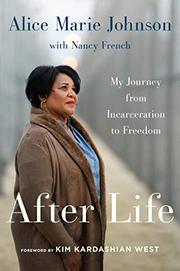
A freed federal prisoner recounts
how she got in—and out.
Johnson was born in Mississippi,
one of nine children who lived in a sharecropper’s shack: “No matter where I
was situated,” she writes, “I couldn’t toss or turn. We fit snugly together and
dared not move until the next day, when the sun’s rays came through the poorly
insulated windows and warmed us.” Her parents aspired to better things, though,
and having secretly built a home in a town 10 miles away—secretly to avoid
angering the white farm owner in those last days of Jim Crow—they moved.
Johnson was a motivated, smart student who got pregnant as a sophomore in high
school; she kept up with her education all the same, eventually getting a job
as a secretary. A too-good-to-be-true scenario unfolded when she was recruited
to act as a relayer of messages between customers and a drug ring—and then was
arrested in a major sting operation. “I didn’t know this at the time,” she
writes, “but whenever someone is up on drug charges, cooperating witnesses frequently
jump in on that case to reduce their own sentences.” Promoted from go-between
to ringleader as a result of others’ testimony, Johnson was sentenced, under
mandatory guidelines, to life in a federal penitentiary—first California,
meaning that her family could not afford to visit, and later in Texas and
Alabama. She made good use of her prison time, writing religious plays, being
cheerfully helpful, and steering clear of trouble—all qualities that helped
bring her case to the attention of Kim Kardashian, who in turn put her husband,
Kanye West, on it, using his connections: “I know Kanye had opened the door for
my release through his support of President Trump.” Freed last year after
serving “twenty-one years, seven months and six days,” she has since become an
advocate for prisoners’ rights, “fighting for those I left behind.”
A moving, inspirational story that
makes a powerful argument for sentencing reform.




Add comment