
 kirkusreviews.com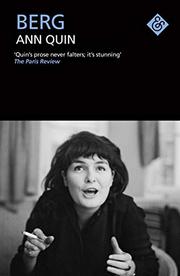
“A man called Berg, who changed his name to Greb, came to a
seaside town intending to kill his father….”
The opening line of Quin’s (The
Unmapped Country: Stories & Fragments, 2018, etc.) debut novel,
originally published in 1964, firmly establishes the British midcentury
experimentalist’s intentions for the story to follow. Arriving in an unnamed
coastal town resembling Brighton in the offseason, Berg takes a room in a
boardinghouse with only a shared particle-board wall separating him from his elderly
father—estranged from Berg since childhood—and his father’s much younger
mistress, Judith. As he lies in bed listening to the couple’s amorous exertions
on the other side of the wall, Berg plots his father’s death as a sort of
revenge gift to his mother, a fragile and perpetually flustered woman named
Edith. The Oedipal strains of the plot continue to thicken as Berg embarks on a
faltering seduction of the feral Judith that’s marked by increasingly desperate
murder attempts against his feckless, opportunistic father. In the febrile
world of postwar England, where the class-driven banalities of poverty meet the
geopolitical banalities of a generation for whom heroism is something their
parents did, Berg strains against his environment, his desire, his body, and
his own psychology in a prose that kinks ever darker and more internal. Quin
masterfully blends Berg’s memories, sense impressions, and hallucinations with
snippets of preserved text from his mother’s letters so that every scene takes
place in prismatic multitude in a style influenced by Virginia Woolf and
Marguerite Duras. As the plot becomes more and more ludicrous, Quin’s black
humor becomes apparent. Berg is reprehensible but also the sort of sweaty
bumbler whose physical comedy as he drags what he believes to be his father’s
corpse across town is reminiscent of a classic French farce. Judith, a Freudian
grotesque in her own right, is also a deadpan put-down artist with a weakness
for impractical shoes. The result is a caustic, destabilizing, and very funny
exploration of depravity in a world where nothing seems all that depraved but
where the daily exigencies of living overwhelm with their ordinary demands.
A must-read masterwork by an author whose star should shine
brighter in the contemporary firmament.




Add comment