
 kirkusreviews.com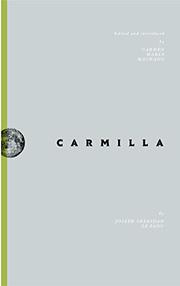
In Irish writer Le Fanu’s (Willing to Die, 1872, etc.)
classic novella, a peculiar visitor arouses strange visions and sensations in a
lonely young woman.
Nineteen-year-old Laura lives “rather a solitary” life in a
Gothic manor tucked in the forests of Styria. So when a carriage overturns
nearby, Laura urges her father to house the passenger inside: the beautiful yet
capricious Carmilla, who mesmerizes Laura with her charisma and ability to
enter her dreams. Le Fanu’s lush, lyrical prose adds a sinister dimension to
the budding relationship while also conveying the passion the two women share:
“Her hot lips traveled along my cheek in kisses; and she would whisper, almost
in sobs, ‘You are mine, you shall be
mine, you and I are one forever.’ ” Since this is a foundational piece of
vampire lore, readers will find little mystery around the root of Carmilla’s
strange behavior—and why Laura falls prey to an inexplicable illness. Still,
Laura’s wistful narration and Robert Kraiza’s expressive illustrations maintain
an air of dread throughout. Carmen Machado’s (Her Body and Other Parties,
2017) introduction adds new dimensions to the tale by revealing that Le Fanu
based his story on real letters written by a woman named Veronika Hausle, but
he excised the queer content: “There was, in fact, so much more detail given”
about Laura’s desire for Carmilla, Machado writes. “She spoke not of the fear
of Carmilla’s return but of a profound desire for it.” Machado powerfully
highlights the “inadequacy” of the original text and calls readers to do the
hard work of reading the real story: “See if you cannot perceive what exists
below: the erotic relationship of two high-strung and lonely women. The shared
metropolis of their dreaming. An aborted picnic in the ruins.”
Simultaneously a delicious vampire tale and a meaningful
exercise in remembering silenced voices and questioning the authority of
tradition.





Add comment