
 kirkusreviews.com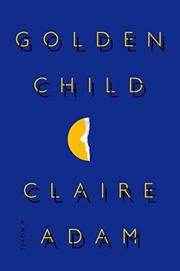
A debut novel about class strife, masculinity, and brotherhood
in contemporary Trinidad.
Adam—herself a native of Trinidad—tells the story of Paul and Peter
Deyalsingh, twins of Indian descent whose lives rapidly diverge. Paul is
socially awkward, a bundle of nervous tics and strange habits, and from a young
age he is dubbed unhealthy by his industrious father, Clyde, who works
tirelessly doing physical labor at a petroleum plant in order to afford a
better life for his children—or, at least, one of them. As he ages, his family
becomes convinced that he is “slightly retarded,” and he is marked as
doomed in comparison to his precociously intelligent brother, Peter—the
“healthy” child. After Peter’s unexpected success on a standardized
test, Clyde and his wife, Joy, single him out as gifted while communicating to
Paul that his possibilities are far more limited. Joy works hard to keep her
children together—”The boys are twins. They must stay together,”
she frequently demands—but Peter’s intellectual gifts create a chasm between
him and Paul. Peter is destined to leave the island, while Paul’s horizon never
exceeds hard labor, like his father before him. Despite the efforts of
Father Kavanagh, a kindly Irish Catholic priest who takes it upon himself
to teach Paul, the family is forced to make an irrevocable decision that will
determine the boys’ fates. Adam excels at sympathetically depicting the world
of economic insecurity, unpredictable violence, limited opportunity, and mutual
distrust that forces Clyde and Joy to make their fateful decision.
Unfortunately, however, the novel telegraphs its biggest plot twist. One can
see the narrative gears turning very early, and as a result Clyde’s decision
isn’t harrowing; by the time its necessary consequences unfold, a reader might
be less moved than Adam hopes. It doesn’t help that many of the characters are
sketchily drawn at best. Clyde, Joy, and Peter are not vividly
depicted, and the decision that renders Paul disposable seems to emanate
out of a psychological vacuum. In the absence of any emotional stakes, the last
third of the novel unfolds like a generic thriller. That’s unfortunate, as Adam
has otherwise written an incisive and loving portrait of contemporary Trinidad.
Paul is the most fully realized character: Adam movingly depicts his struggle
to break free of his family’s conceptions of his abilities. As a result, the
novel is most moving when it becomes a heart-rending character study of post-colonial
adolescence that recalls V.S. Naipaul and George Lamming.
A fascinating novel that fails to stick its landing.




Add comment