
 kirkusreviews.com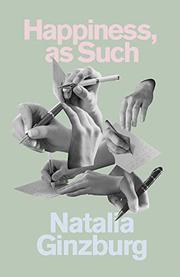
A young man flees to England, leaving his family in shambles
behind him.
Michele is the only son of an
Italian family. His parents are divorced, his sisters grown. It’s 1970, and
Michele may or may not be involved in some sort of radical politics. He may or
may not be the father of a newborn baby. In any case, he’s just taken off for
England, leaving everyone else behind. In the latest installment of Ginzburg’s
(Family Lexicon, 2017, etc.) oeuvre to appear in English, it is
Michele’s absence that drives the novel and each of its self-involved
characters—Michele’s mother, Adriana; his sister, Angelica; friend Osvaldo;
and Mara, the young woman whose baby might be his. The novel is a swiftly
moving blend of dialogue and letters. “I doubt you’ll come over for my
birthday,” Adriana writes Michele, “because I don’t think you remembered it.”
Adriana’s letters can be passive-aggressive and self-aggrandizing, but at the
same time, Ginzburg has made her—and all the others—into a nuanced, sympathetic
character. Some of the best scenes involve Mara, who, with baby in tow, is a
flighty mess: perpetually broke, unemployed, and disorganized, she relies on
the people around her to get her through. And she’s hilarious. “Your sister
Angelica came to see me,” she writes to Michele. “She gave me money. Sixty
thousand lire. I can’t do anything with sixty thousand lire, but it was a nice
gesture.” As a whole, the novel speaks to Ginzburg’s remarkable range as a
writer: She could and did write deeply moving works about the Second
World War, which she survived, but she could also write comically. Beneath the
currents of humor and wit is a subtle work of insight and feeling.
Another masterpiece from one of the finest postwar Italian
writers.



Add comment