
 kirkusreviews.com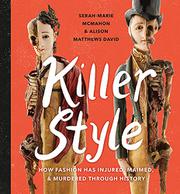
From lead-based cosmetics to
radioactive wristwatches; from arsenic-green gowns to sandblasted denims: Fashion’s
victims are sometimes the wearers and sometimes the creators.
The introduction references Oscar de
la Renta’s coining of the phrase “fashion victims,” noting that the pages to
follow, while not ignoring his definition, will expand it to include more
literal victims: “people who have suffered physical pain, injury, and worse,
attempting to look more attractive, or to make others look more attractive.”
Three luxuriously illustrated chapters tackle heads, middles, and legs,
respectively. The first leads off with one of history’s more-famous tales of
fashion-related occupational hazards: the use of mercury-cured felt by
hatmakers from the 1730s into the 1960s. The text mentions the disturbing fact
that, despite compelling evidence of mercury poisoning, England never banned
its use; the dearth of currently ill milliners comes instead from felt’s having
lost its fashion cachet. After exploring three other head-related tales, the
book moves on to an entertaining history of corsets and their reputations,
including a note about the 2016, Kardashian-promoted “waist trainer.” There is
also an excellent double-page spread comparing two factory catastrophes: the
1911 Triangle Shirtwaist Fire in New York and the 2013 collapse of the Rana
Plaza in Bangladesh. The text uses puns, alliteration, and a conversational
tone, but it never crosses the line into disrespect or sensationalism.
Colorful, original silkscreens, historical photographs, and vintage art
complement the magazine-style format.
Accessible and informative. (bibliography,
index) (Nonfiction. 9-14)






Add comment