
 kirkusreviews.com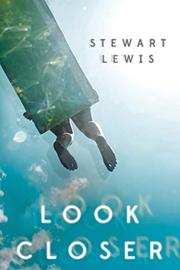
A swimming prodigy sees vague
premonitions of death as she mourns her father.
After her father’s death, Tegan struggles:
She lacks motivation to apply to college or swim, a sport at which she excels.
Her best friend has moved and she feels isolated at home, where her mother’s
new marriage disgusts her. She sees those around her as objects, especially the
local homeless population, whom she calls “randoms.” Tegan finds names on a
cereal box and her windowsill that lead her to witness a suicide, and soon other
names of people about to die appear to her. Tegan’s attempts to save them lead
her to renewed connections with her mother and swim coach, romance with a Manic
Pixie Dream Boy, and some facile closure about her father. Tegan’s absent best
friend, implied black and the sole significant character of color, is portrayed
as stereotypically sassy; Tegan cozies up to a popular white girl with a racist
history. Descriptions of diverse background characters reinforce the white
default and too often fall into tropes. A sexualized joke by Tegan’s male coach
and her wearing of her father’s underwear feel off. The people Tegan saves
remain two-dimensional vehicles for her own pity and navel-gazing. A
potentially thrilling final twist pulls its punch in favor of a milquetoast
metaphor, and Tegan concludes her story with a series of shallow truisms about
embracing life.
Despite the title’s plea, there’s
not much worth close examination here. (Magical realism. 13-16)





Add comment