
 kirkusreviews.com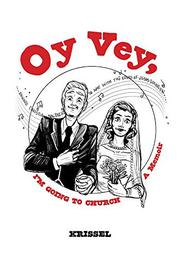
A debut memoir offers a wealth of
mid-20th-century, upper-middle-class Jewish lore.
Krissel was born in 1941 into a
Jewish upper-middle-class family. Her immigrant grandfather Morris became an
extremely rich success, thanks to his brown grocery bag business. By the time
she was born, he was the patriarch to whom abject obedience was owed. His two
daughters, Kitty and Mimi, and their husbands lived cheek by jowl with one another
and with Morris and his wife, Esther, on an estate in Mount Kisco, New York, or
in an apartment house in Manhattan. In addition, the sons-in-law were dragooned
into the family business. Kitty and Mimi filled their days schmoozing on the
phone and shopping. In an age of robust anti-Semitism, there were Jewish
country clubs, schools, and summer camps. About 20 families—“the Gang”—composed
a very tightknit Jewish community, by choice and necessity. But when the author
was to start ninth grade, Kitty decided to send her to a gentile, all-girls
private high school—a fateful decision indeed. Krissel (who is referred to as
“Toni” just once) was uncomfortable at first but eventually, because she was a
good athlete, made friends. This breakthrough led inevitably to her meeting and
marrying “Superwasp,” a lawyer whose forebears actually did come over on the
Mayflower. The union produced three kids and still endures. Superwasp was
accepted by the author’s family with surprisingly little trauma, with any objections
basically being more cultural than religious. Krissel is a competent
writer, offering some vivid anecdotes and rich historical details. But the memoir
sometimes reads like diary jottings, and is a bit scattershot, as if recorded
with the equivalent of a hand-held camera. One does wonder about the anonymity
of it all. There are no surnames and “Superwasp” is all the author’s husband
gets. This is Krissel’s right, of course, but readers will be naturally curious
and find the approach a bit annoying. Still, as light entertainment, this book
can hold its own: The audience will keep reading.
Come for the scandalous marriage,
but stay for the engaging cultural study of a time and place.




Add comment