
 kirkusreviews.com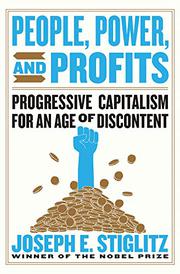
The renowned economist builds on his already extensive writings
in the hope that policymakers will see the wisdom of altering both political
and financial practices to restore the middle class in the United States.
Though Nobel Prize–winning economist Stiglitz (International and
Public Affairs/Columbia Univ.; The Euro: How a Common Currency
Threatens the Future of Europe, 2016, etc.) has unquestionably earned the
prestige to be heard on nearly any issue related to the economy, he concedes
that the cataclysmic changes he proposes would probably never derive from the
current Republican Party and might never occur if the Democratic Party controls
the White House and Congress. Regardless, the author rarely wallows in
pessimism as he presents his extensive platform in language that will be
accessible to most general readers. Stiglitz sets the stage for his
approachable narrative by recalling his childhood in a healthy industrial city
(Gary, Indiana) and how, when he returned to Gary for his 55th high school
reunion, the healthy economy had been tainted by a combination of political and
economic policies benefitting the ultrawealthy. Those conditions led to massive
income inequality, one of the most significant issues facing the country today.
Stiglitz pinpoints the causes as a toxic stew of too-big-to-fail banks placing
greed above economic growth, government initiatives favoring globalization
without protecting American laborers, lack of recognition by both government
and the private sector that shifts from a manufacturing economy to a service
economy require a new paradigm, and the lack of effective responses to
obviously increasing income inequality. In the second part of the book, the author
offers a massive platform for change that must be preceded by voters choosing
candidates for Congress and the White House who are willing to cast aside the
hegemony of the ultrawealthy. As he writes, “achieving greater equality is not
just a matter of morals or good economics; it is a matter of the survival of
our democracy.”
A lucid book grounded in vast knowledge—and equally vast
idealism.



Add comment