
 kirkusreviews.com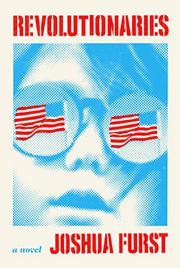
A grown-up child of the 1960s looks
back in anger, seasoned with retroactive awe, at his mercurial father, a
legendary activist and counterculture icon.
It will be all but impossible for
readers of a certain age to wander far into this elegiac monologue about family
upheaval, political tumult, and ruined hopes without thinking of Yippie
co-founder Abbie Hoffman (1936-1989), who challenged the political establishment
in the ’60s with anarchic humor, incendiary rhetoric, and heedless mischief.
Most (if not quite all) of the things that happen in this novel to the
irrepressible Lenny Snyder, from his glory days as street-level activist and
counterculture superstar to his early-1970s period on the run from drug-related
criminal charges, happened in real life to Hoffman. Playwright Furst, who
displayed wit and empathy dealing with youthful protagonists in Short People
(2003) and The Sabotage Café (2007), filters Lenny’s life through the
childhood reminiscences of his grown-up son, Fred, short for “Freedom,” who was
literally conceived by Lenny and his wife, Suzy, on the grounds of Central
Park’s Sheep Meadow minutes after they were married in front of “four thousand
witnesses tripping on acid and a photographer from the Associated Press.” At
first, Fred, along with everybody in Lenny’s orbit, is enthralled with his
dad’s “cracked-whip cackle,” rapid-fire patter, and physical courage. But the
older Fred gets, the more bewildered he is by Lenny’s mood swings and the
verbal abuse and offhand neglect he visits upon those closest to him, whether
it’s Fred’s mother, the novel’s most heartbreaking character, or folk singer
Phil Ochs, who’s a very close second as he always shows up to help, despite his
estrangement from Lenny and his own physical and psychological decline,
wherever Suzy and Fred are struggling to live after Lenny’s deep dive into the
underground. Other real-life characters come into view, including Allen
Ginsberg, William Kunstler, and Jerry Rubin, though Rubin’s thinly disguised
persona appears under the name Sy Neuman. But what raises this book far above
being a roman à clef are the vivid scenes of Fred trying to have a normal
childhood in gray, grimy Nixon-era New York City and of him and his mother
finding solace with each other as they watch Lenny drift away from them,
literally and figuratively.
A haunting vision of post-’60s
malaise whose narrator somehow retains his humor, compassion, and even optimism
in the wake of the most crushing disillusionment.




Add comment