
 kirkusreviews.com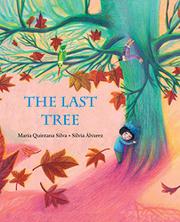
What if all the world’s trees
disappeared?
The fear of being burned or cut to pieces
convinces the trees in Goran’s world to pull up their roots and depart, taking
the shade, the birds, and the animals and leaving behind a “thick, grey smog.”
Remembering all the ways he’s enjoyed the tree in his garden, Goran worries
that it will leave too. He convinces it to stay and sleep through the winter while
he and his friends replant the forest and pick up trash. In spring, the tree
wakes to a better world. Quintana Silva, who described a refugee experience in Kalak’s
Journey (illustrated by Marie-Noëlle Hébert and also translated by
Brokenbrow, 2018), here introduces children to another distressing issue:
deforestation. The obvious lesson in this parable is hammered home by its last
line: “No trees were harmed in making this story.” The Spanish publisher has
used a special “stone paper” made with calcium carbonate and high-density
polyethylene. This paper feels lovely in the hand, and the pastel
illustrations, done in vivid, if synthetic, colors, show off beautifully. But
librarians should weigh the advantages and disadvantages of this paper, which
is advertised as durable, waterproof, and photo degradable—that is, the art may
fade in time. While it lasts, though, it will make a conversation-provoking
read-aloud. Goran presents white. The Spanish edition is also available.
Best when shared with early
elementary schoolers by an adult with time and tact for the discussion that
will surely follow. (Picture book. 5-9)






Add comment