
 kirkusreviews.com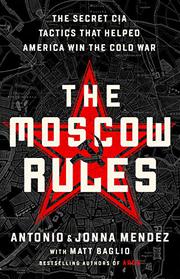
Two former CIA agents stationed in Moscow reveal the ins and
outs of spycraft.
The golden days of the espionage aspect of the Cold War may have
been the early 1960s, but the contest was still going strong in the late-’70s,
when the Mendezes (Spy Dust, 2002, etc.) were CIA operatives in
Moscow. It was a heady and dangerous time, they write, whose closing months,
dating into the mid-’80s, were marred by revelations of double agents and the
quick dismantling of the CIA’s spy network. “The majority of Soviet citizens
working for us,” they write, “had been arrested and executed, most of them
betrayed by Americans inside the intelligence community.” But before that,
there was a world of spycraft to explore, with elaborate disguises,
consultations from magicians who helped construct secret compartments, and all
kinds of nifty gadgetry, such as “a contraption that would allow an individual
to rapidly rappel down an apartment building and return up the rope using an
ascension device, which had fondly been nicknamed the Spiderman.” Cool tools
aside, the authors make it clear that espionage is a deadly business, and
dealing with nations that are good at it requires a special kind of agent and a
flexible protocol (the “Moscow rules” of the title). One evolutionary stage of
those rules occurred in the 1960s, when the U.S. and U.K. collaborated to “run”
a Soviet agent whose intelligence helped prevent the Cold War from turning hot
during the Cuban missile crisis. Another was to bring in technical officers
“who would never have feet on the ground in an actual CIA overseas operation,”
including scientists, graphic artists, and the like. Much of what the authors
describe is the quotidian back and forth of spycraft, boredom punctuated by
episodes of real excitement; the narrative has the same choppy feel at times,
but reading about prosthetics, cameras hidden in fountain pens, and other such
things makes for eye-opening entertainment.
Fans of le Carré and other spinners of secret-agent tales will
find this of considerable interest.




Add comment