
 kirkusreviews.com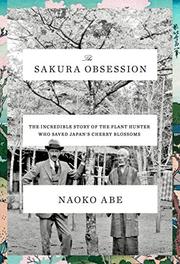
The story of the connection that
linked one man, one flower, and two countries.
Lovers of the outdoors, especially
gardeners, will find much to enjoy in Japanese journalist Abe’s first English-language
book, which won the Nihon Essayist Club Award in 2016. The author engagingly
chronicles the travels and plant-collecting adventures of Collingwood Ingram
(1880-1981). The Englishman, born to wealth in Victorian times, spent his
sickly youth wandering the countryside, where he developed a passion for birds.
In 1902, he traveled to Japan to see the birds there, which were similar to
England’s, and was swept up by the beauty of the country; the young man vowed
to return. After World War I, he gradually lost interest in ornithology but
began an obsession with horticulture, spurred by his family’s move to Kent in
1919. On the property, he found two magnificent flowering Japanese cherry
trees, leading him to a long life of discovering, preserving, breeding,
grafting, and sharing rare varieties. Interspersed throughout the book are
pieces of Japan’s history over the last 2,000 years, and Abe provides
sufficient detail to edify but never to bore. The author clearly shows the
national importance of the cherry tree and how its perception changed with Westernization.
Abe’s statement that Japan is and was the world’s most artistic nation is
exemplified by the 250 varieties of cherry tree developed during that era. In
the 1920s, as Japan nationalized and modernized, the importance of reviving
failing cherry trees was forgotten; there was no money, urgency, or political
will to save them. Thanks to the enterprising work of Ingram, however, “they
bloomed around the world, in arboretums and parks, along city streets and
riverbanks and in millions of suburban gardens.” Indeed, writes the author,
“Ingram had helped to change the face of spring.”
This charming book shows how indebted
the world is to Ingram for his work in creating “a shared treasure—the cherry
blossom—for all to enjoy.”






Add comment