
 kirkusreviews.com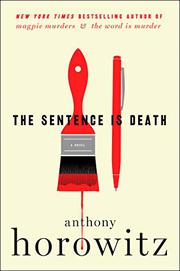
Fired Scotland Yard detective Daniel Hawthorne bursts onto the
scene of his unwilling collaborator and amanuensis, screenwriter/novelist
Anthony, who seems to share all Horowitz’s (Forever
and a Day, 2018, etc.) credentials, to
tell him that the game’s afoot again.
The victim whose death requires Hawthorne’s attention this time
is divorce attorney Richard Pryce, bashed to death in the comfort of his home
with a wine bottle. The pricey vintage was a gift from Pryce’s client, well-to-do
property developer Adrian Lockwood, on the occasion of his divorce from noted
author Akira Anno, who reportedly celebrated in a restaurant only a few days
ago by pouring a glass of wine over the head of her husband’s lawyer. Clearly
she’s too good a suspect to be true, and she’s soon dislodged from the top spot
by the news that Gregory Taylor, who’d long ago survived a cave-exploring
accident together with Pryce that left their schoolmate Charles Richardson
dead, has been struck and killed by a train at King’s Cross Station. What’s the
significance of the number “182” painted on the crime scene’s wall and of the
words (“What are you doing here? It’s a bit late”) with which Pryce greeted his
murderer? The frustrated narrator (The Word Is Murder, 2018) can barely
muster the energy to reflect on these clues because he’s so preoccupied with
fending off the rudeness of Hawthorne, who pulls a long face if his sidekick
says boo to the suspects they interview, and the more-than-rudeness of the
Met’s DI Cara Grunshaw, who threatens Hawthorne with grievous bodily harm if he
doesn’t pass on every scrap of intelligence he digs up. Readers are warned that
the narrator’s fondest hope—“I like to be in control of my books”—will be
trampled and that the Sherlock-ian solution he laboriously works out is only
the first of many.
Perhaps too much ingenuity for its own good. But except for Jeffery
Deaver and Sophie Hannah, no one currently working the field has anywhere near
this much ingenuity to burn.






Add comment