
 kirkusreviews.com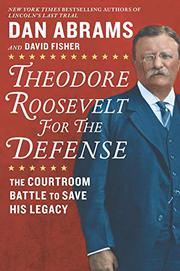
An account of a much-publicized early-20th-century trial
that exposed “the sordid reality” of New York State politics.
In April 1915, eager spectators filled a Syracuse courtroom
in anticipation of a trial involving one of the most prominent men in America:
former President Theodore Roosevelt, who was being sued for libel by party boss
William Barnes over Roosevelt’s published assertion that Barnes was corrupt. The
trial yielded a 3,738-page typed transcript as well as colorful reports in
newspapers across the country, sources that ABC’s chief legal affairs
correspondent Abrams and Fisher (co-authors: Lincoln’s Last Trial: The
Murder Case that Propelled Him to the Presidency, 2018, etc.) have mined
thoroughly to produce a detailed—sometimes dramatic, sometimes humdrum—account
of the drama. The abundant sources prove to be both a boon and a shortcoming:
Not all of the 104 witnesses who testified during the trial were compelling;
nor were some issues—such as Barnes’ “alleged involvement in printing industry
corruption,” which occupied the court for many days. The highlight of the
trial—and of this book—was the week that Roosevelt, “an explosion of energy,”
took the stand. As the New York Press reported, Roosevelt
dominated the courtroom “with that marvelous personality of his and has won
more friends in Syracuse than he made at any particular time.” After more than
38 hours of questioning, heckled by the plaintiff’s lawyers, who tried to goad
him into anger, he emerged “smiling and happy and ready for more,” stepping
down from the stand and grinning at the jury. The trial was not the only news:
War was brewing in Europe, and President Woodrow Wilson strained to keep America
out of the fray. Roosevelt strongly urged engagement, a stand that worried his
lawyers, who were fearful of alienating several jurors of German descent.
Roosevelt held back from criticizing Germany—until the sinking of the Lusitania,
“piracy accompanied by murder,” he said, impelled him to urge America’s
immediate entry into the war.
A feisty Roosevelt takes center stage in a mostly lively
history.



Add comment