
 kirkusreviews.com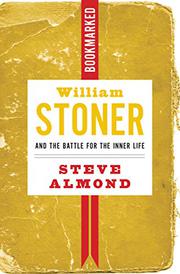
Literary criticism/memoir regarding an overlooked American
novel.
In the latest volume in the publisher’s Bookmarked series,
Almond (Bad Stories: What the Hell Just Happened to Our Country, 2018,
etc.) delivers an energetic discussion of Stoner, the 1965 novel by
John Williams (1922-1994), who won a National Book Award for Augustus (1972).
The Bookmarked series encourages authors to personally engage with the works
they are championing, and Almond delves into personal failures and
accomplishments as well as relationships with family, friends, and students,
all through the prism of Stoner. Though some readers may find this
approach disruptive, it results in a sensitive and perceptive reading of a
novel Almond first read when he was a struggling 28-year-old writer. He has
since read it innumerable times, each time learning more about the novel and
himself. Stoner, which has been reissued a few times, is a quiet,
reflective tale that recounts the life of a rural farm boy who becomes an
English professor, husband, and father. Almond offers this “peculiar pint-sized
ode” to a novel that has become for him a manual for “living.” A “literary
novel” that is also “subversive,” Stoner “casts a piercing
light upon the worship of power and wealth that has corroded our national
spirit.” Almond loves how it “captures with unbearable fidelity the moments of
internal tumult that mark every human life.” At times, he gets “furious” with
William Stoner the “perfect martyr,” the “hardcore masochist.” He discusses the
novel’s “unrelieved narration,” or “plain style,” as Williams described it, and
its portrayal of a wrecked marriage, the nasty world of academic in-fighting,
and the challenges of child-rearing. Almond argues that Stoner is
both an anti-war novel and, with its detailed portrait of the “collision of
poverty and privilege,” a “radical social novel.”
A concise, useful examination of a novel that, at its heart, is
a “wise and merciful book” about the love of teaching.




Add comment