
 kirkusreviews.com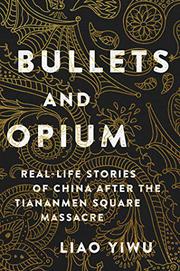
A survivor of the 1989 Tiananmen
Square massacre offers a searingly honest examination of the lives broken by
that momentous event.
Poet Liao (For a Song and a Hundred Songs:
A Poet’s Journey Through a Chinese Prison, 2013, etc.) presents a
series of harrowing, unforgettable tales of hardship of Chinese who essentially
forfeited their youth due to their revolutionary fervor during Beijing’s
Tiananmen demonstrations in June 1989, when the authorities cleared the square
with tanks, killing or injuring thousands of protesters. Unlike the more
privileged Beijing students, whose parents had connections and could spirit
their children out of the country, the “June Fourth thugs,” as the Chinese
authorities named them, took the brunt of the violence for their zealous
actions, such as throwing eggs at a Mao Zedong portrait. Most received harsh prison
sentences involving appalling conditions and slave labor. For reciting a poem
about the massacre, “rebel poet” Liao was sentenced to jail, torture, and slave
labor. When he got out, he endured “a living hell” in terms of emotional
turmoil, a broken marriage, sexual dysfunction, unemployment, and constant
police surveillance. Ultimately, the only solace he found was in his mission to
seek out and interview fellow “thugs,” whose stories mirrored his in many ways:
idealistic youth who were swept up in general democratic spring fever, against
the wishes of their wary parents incubated in the Cultural Revolution. As these
powerful profiles clearly demonstrate, they paid dearly for their activism,
suffering the brutality of the Chinese prison system and “education through
labor” (including exhausting days making latex gloves for the American market)
followed by joblessness, homelessness, and shunning from family and friends.
The details about Liao’s interviewees—e.g., “the performance artist,” “the
idealist,” “the arsonists,” “the street fighter”—are excruciating and intimate.
Had he not fled the country in 2011, they may never have emerged; after all,
three decades later, “the regime that committed the massacre is still in
power.”
An indispensable historical
document capturing the plight of “people scarred by history and then worn down
by money and power.”



Add comment