
 kirkusreviews.com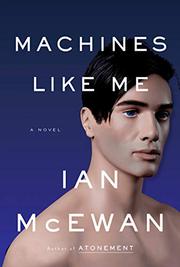
The British author’s latest novel concerns a triangle formed by two humans and one android in
an alternate version of England.
The year is 1982, the British are
about to lose the Falklands War, and Alan Turing is not only still alive, but
his work has helped give rise to a line of androids almost indistinguishable
from humans. The narrator, Charlie Friend, an aimless 32-year-old, inherits
enough money to buy one of the pricey robots. He and Miranda, the younger woman
living above him, each supply half the “personality parameters” required to
push Adam past his factory presets. Before long, as things between the humans
seem to be getting serious, Charlie finds himself the first man “to be
cuckolded by an artefact.” They all survive the fling, although Charlie
imagines he detects “the scent of warm electronics on her sheets,” and Adam
turns lovesick, composing 2,000 haiku for Miranda (namesake of the Bard’s
character who famously utters: “O brave new world, / That has such people
in’t”). Early on, the android has told Charlie that Miranda is a liar and might
harm him without providing details. These statements flag a fateful backstory comprising a teenage Miranda, two schoolmates, and a death
threat. Along the way to a busy and disturbing ending, Charlie makes a
connection with Turing that allows for some nerd-pleasing kibble like “non-deterministic
polynomial time.” McEwan (Nutshell, 2016, etc.) brings humor and considerable ethical rumination
to a cautionary tale about artificial intelligence. But his human characters
seem unfinished, his plot a bit ragged. And why the alternate 1982 England,
other than to fire a few political shots about the Falklands, Thatcher, and
Tony Benn? Does the title make sense as either clause or complete sentence? Are
we meant to imagine the “real” author as a present-day Adam?
McEwan is a gifted storyteller, but
this one is as frustrating as it is intriguing.



Add comment