
 kirkusreviews.com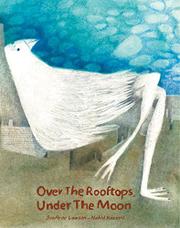
An individual’s relationships to
self and community are pondered in this metaphorical outing.
“You can be far away inside, / and
far away outside. / With others, but still on your own.” Smudgy, mixed-media
paintings use negative space to depict a long-legged bird that’s the off-white
of the mottled paper. It leans against a chimney, soars over a city, lounges
with others of its ilk. As Lawson’s second-person text continues, the bird
begins to interact with the city’s people, its feathers taking on colors and patterns
worn by the diverse human residents. It rides a roller coaster with the humans
as its flock takes wing. “But then snow falls / and something changes again.”
As the humans don their winter coats, the bird flies from the icy climes to
another city, with archways and palm trees, where it rejoins its flock, “alone
and together / over the rooftops / and under the moon.” Iranian-born Kazemi’s
illustrations are as porous and open to interpretation as Lawson’s text. The
bare bones of the visual story are accessible to children who have begun to
understand the fundamentals of migration, but they are also, appropriately,
enigmatic. Children beginning to understand that they are separate from those
who surround them will sense the emotional truth that underpins both pictures
and text even if they cannot yet articulate it.
This metaphor for the construction
of self offers much to thoughtful readers. (Picture book. 4-8)



Add comment