
 kirkusreviews.com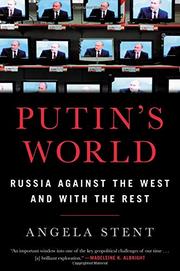
An incisive exploration of “how and
why Russia has returned to the world stage”—and the prospects for the future.
Casting back into the country’s
history, Stent, former national intelligence officer and current director of
the Center for Eurasian, Russian, East European Studies at Georgetown (The Limits of Partnership: U.S.-Russian
Relations in the 21st Century, 2014), offers a deeply informed look at why
Russia, directed by President Vladimir Putin, persists in behaving in what the
West regards as an exceedingly maddening, paranoid, and often aggressive
manner. After “a decade of political chaos and an economic meltdown,” Russia
went from being a regional power, according to Barack Obama, to one whose reach
“is now clearly global.” Among the many elements that demonstrate how Russia has
established a new geopolitical identity: its triumphal staging of the Winter
Olympics in 2014 and, later, the 2018 World Cup; the annexation of Crimea;
launching of war in southeastern Ukraine; and edging out the United States as
the new power broker in the Middle East, specifically in backing Syria’s
president Bashar al-Assad in his civil war (“Russia’s first military foray
outside the former Soviet borders since the 1979 invasion of Afghanistan”).
Looking at the country’s past glories and grievances under a series of
eccentric, occasionally dangerous czars in order to underscore its unique place
in the world and sense of exceptionalism, Stent insightfully dissects its
prickly relationship with both the U.S. and many European countries, who had
hoped Russia post–Soviet Union would become “a responsible stake-holder in a
post–Cold War, rules-based liberal international order [the West] had created.”
The author also considers Russia’s “wary” relationships with neighbors China, Japan,
and others. As she astutely notes, Russia has always defined itself in
opposition to the West, and “isolating [it] and refusing to deal with it,
however appealing that may appear to some, is not an option.”
A compelling historico-psychological
work delineating how the West should respond to Russia going forward.




Add comment