
 kirkusreviews.com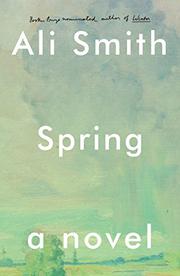
The third installment of Smith’s Seasonal Quartet (Autumn,
2017; Winter, 2018) touches on previous themes of creativity and
friendship and delves deeper into current events with a sharp-edged look at the
treatment of immigrants.
In the spring of 2018, a TV director named Richard discusses a
new film with a woman named Paddy, a brilliant, ailing scriptwriter with whom
he started working in the 1970s. The project and their decadeslong relationship
will punctuate the book’s time-bending narrative, a large swath of which
concerns a few days in the following October. Paddy has died, and Richard takes
a train to Kingussie, Scotland, and considers suicide. Around the same time,
Brittany, a guard at one of England’s immigrant-detention centers, meets the
quasi-magical 12-year-old Florence and agrees to entrain for Scotland as well.
Joining the sparse cast in Kingussie (pronounced Kin-you-see, in a devilish
pun) is Alda, the driver of a coffee van with no coffee. All is revealed in the
spring of 2019. As in the first two books, Smith alludes to contemporary
issues, such as #MeToo, Brexit, and fake news, but on immigrants she grabs a
megaphone. The book’s opening chapter is a verbal collage of rant and headline.
Smith uses Brittany to spotlight grim details behind the cynicism and cruelty
of Britain’s immigrant-detention policy, while Alda and Florence suggest the
roots of a solution. Roots, shoots, and buds abound amid myriad references
to death and rebirth, from the Hanged Man pub to Orpheus, Norse mythology’s
Ragnarok, and Shelley’s “The Cloud.” The three novels have a few common
elements—the pain and pleasure of creativity; the pairing of an older adult and
an intelligent youth; the showcasing of an English female visual artist, here
Tacita Dean—but they are self-contained and increasingly urgent in their hope
that art might bring change. As Alda says, “Those stories are deeply serious, all
about transformation.”
Smith’s work is always challenging and always rewarding.



Add comment