
 kirkusreviews.com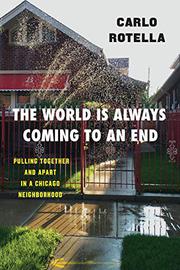
An ambitious analysis of a singular neighborhood that in some
ways serves as a microcosm for all urban neighborhoods.
“We live in neighborhoods, and neighborhoods live in us,” writes
Rotella (Director, American Studies/Boston Coll.; Playing in Time:
Essays, Profiles, and Other True Stories, 2012, etc.). The concept
“describes both a place and a quality of feeling, a physical landscape and the
flows of population, resources, and thought moving through it.” The
neighborhood he specifically references is Chicago’s South Shore, where he and
his parents moved as it was in the midst of transitioning from a mostly white
neighborhood to one that is predominantly black. It also changed from a
middle-class community into one blighted by drugs, crime, and gangs, one that
has seen its only supermarket close and its bank as well, with empty
storefronts lining what were once bustling streets and residents doing their
shopping far from where they live. Yet its proximity to Lake Michigan and
convenience to downtown transportation make it attractive. Consequently, the
remaining black middle class fears that it will be gentrified out of the
neighborhood, just as white residents fled to the suburbs as speculators warned
that their property values were dropping because of the influx of black
newcomers. As in much of the country, the recession of 2008 hit the
neighborhood hard, and there has been as much tension between haves and
have-nots as there has been between black and white citizens. As Rotella paints
it, South Shore is a community where the center cannot hold, where the middle
class is disappearing, where the well-to-do and the unemployed live in close
proximity, and where younger activists who want to build bridges across the
class divide meet resistance from older residents who wish to erect
walls. The author offers a nuanced narrative, partly personal and partly
sociological, that keeps circling back to the same important truths about race,
class, community, poverty, and crime.
A thought-provoking deep dive into a neighborhood that remains
in perpetual transition.






Add comment