
 kirkusreviews.com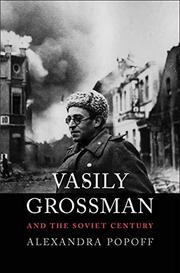
Comprehensive biography of the
great Soviet war correspondent, novelist, and dissident.
As a young man, Vasily Grossman
(1905-1964) ignored advice to change his patronymic from Solomonovich to
Semyonovich, embracing his Jewish heritage in a time of pogroms. He was
skeptical about the Bolshevik Revolution, writing in his novel Everything
Flows, “in February 1917, the path of freedom lay open for Russia. Russia
chose Lenin.” Yet, as Moscow-born journalist and historian Popoff (Tolstoy’s
False Disciple: The Untold Story of Leo Tolstoy and Vladimir Chertkov,
2014, etc.) writes, Grossman weathered tuberculosis and unsatisfying work as a
chemist (not in that alone does he resemble the Italian writer Primo Levi) to
embark on a literary career. An early novel presaged themes he would follow in
later works, namely the sameness of different totalitarian systems; the
similarities between Stalin’s and Hitler’s regimes would emerge in several of
his pieces, which did not endear him to the authorities. He traveled with units
of the Red Army throughout World War II as a war correspondent, getting into
the thick of Stalingrad, Kursk, and, later, Berlin, providing some of the best
reportage on any theater of the war: “The dead sleep on the hills,” he wrote of
Stalingrad, “near the ruins of factory workshops, in gullies and ravines; they
sleep in places where they fought….Sacred land!” His novel Life and
Fate, which preoccupied him for years, captured those experiences while
repeating his mistrust of totalitarianism. Amazingly, he was not executed, but
he constantly ran afoul of Soviet authorities and often endured their
“administrative violence.” As Popoff notes in closing, Grossman remains little
known in Russia today, in part because of historical amnesia and in part because
Vladimir Putin, “who is striving to re-create the Soviet police state,” does
not brook criticism of Stalin or any equation of Stalinism and Hitlerism.
An essential companion to the
ongoing reissue campaign, courtesy of the New York Review of Books, of Grossman’s work in English and
of interest to students of literature, journalism, and history alike.




Add comment