
 kirkusreviews.com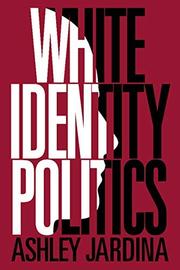
A data-based examination focuses on
what defines white identity and how it shapes political beliefs.
In this debut sociology book,
Jardina takes a scholarly look at the evolution of white identity and white
consciousness in the United States, drawing on several national surveys as well
as an existing body of research. After a review of current literature on racial
identity theory, the author takes readers through a statistical analysis that
measures the correlation between people’s identification with whiteness and how
they understand its role in their lives. She also offers a number of
potentially related views and beliefs, like opinions about Social Security,
welfare, and Medicare; real and perceived economic status; and the changing
status of whites. Jardina finds little evidence of a connection between
economic status and white identity but a “powerful and robust” link between
white identity and negative attitudes toward immigration. The book concludes
that while previous studies have looked at whiteness as a response to other
ethnic groups, it is more effective to assess whites’ attitudes toward their
own community—in-group rather than out-group relations, in sociology terms. While
the volume’s many figures and paragraphs of statistical analysis can make for
dry reading—though excerpts from responses to the surveys’ open-ended questions
do provide some anecdotal leavening—Jardina’s prose is strong when she begins
to draw conclusions from her data: “Put bluntly, the politics of white identity
is marked by an insidious illusion, one in which whites claim their group
experiences discrimination in an effort to reinforce and maintain a system of
racial inequality where whites are the dominant group with the lion’s share of
power and privileges.” The work’s narrative structure will be more appealing to
the specialist or researcher than to casual readers. But for its intended
audience, the volume is an admirable success, with coherent arguments (many
continued in the detailed endnotes), a clearly explained research process, and
a new outlook that may encourage readers to approach questions of white
identity from a more useful perspective.
A well-researched analysis of what
white identity means from an academic’s point of view.






Add comment