
 kirkusreviews.com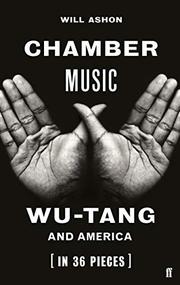
An illumination of hip-hop, race, religion, and America, through
a close reading of an influential debut album.
On the surface, this book commemorates the 25th anniversary
of “Enter the Wu-Tang (36
Chambers),” but there is much beneath the surface, making for a
conceptually audacious critical study about the conceptual audacity of the
Wu-Tang Clan—and well beyond. Ashon (Strange Labyrinth: Outlaws, Poets,
Mystics, Murderers and a Coward in London’s Great Forest, 2017, etc.)
investigates how avant-garde jazz musicians, whose styles were dismissed at the
time as nonmusic or anti-music, led to howls from the hip-hop abyss to an even
more powerful and popular artistry initially dismissed as nonmusic: no musical
instruments, no conventional melodies, no singing. He also explores how that
music and its culture has since swallowed up the culture at large as well as
the affinity that radical black American artists have felt for Asia in general
and kung fu movies in particular, identifying with the other as it battles
cultural oppression. In perhaps the most audacious chapter—or “chamber,” as it
references the title of the Wu-Tang Clan’s debut, which itself references the
title of a kung fu movie—the author declares, “hip hop is a martial art. That
is the key insight of the Wu-Tang Clan….It doesn’t share certain
practices with a martial art. It actually is a martial art….The
legendary MC and thinker KRS-One describes hip hop as ‘a mental survival tool
for the oppressed,’ and once you begin to tunnel down into what that might
mean, the parallels become clear.” Ashon also devotes considerable space to
religious esoterica, the pseudoscience of race, guns, and drugs, recording
technology and economics, the Staten Island Indian tribes, and the cultural
history of 42nd Street.
Near the end, the author addresses cultural appropriation, as
well, acknowledging that “this book shouldn’t exist”—not by a white author from
an ocean’s remove, but, “I wrote it anyway, even knowing I shouldn’t.” Hip-hop
fans and anyone interested in the deeper seams of American culture will be glad
he did.





Add comment