
 kirkusreviews.com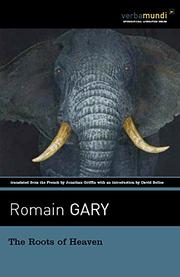
Gary (1914-1980; The Kites, 2017, etc.), French
Resistance aviator, war hero, and the only author to win the prestigious Prix
Goncourt under two different names, overlays the plight of elephants and humans
in this sprawling and ambitious novel set in post–WWII Africa.
The book begins as a story within a story, in a style
reminiscent of Conrad, the details emerging gradually. A Jesuit priest arrives
deep in the bush of French Equatorial Africa to question the colonial
administrator there about events of the recent past. At the heart of the story
is an idealist and former dentist named Morel, who petitions for the protection
of the elephant herds. Dismissed as a crackpot and accused of misanthropy for
caring more about elephants than people, he eventually abandons his petition
and turns vigilante, shooting hunters and elephant trappers, burning ivory
traders’ buildings, ordering a trophy hunter flogged in public. His story
catches the world’s attention, stirring up sympathy for his cause and creating
a public relations disaster for the local colonial government. Others join him:
an elderly Danish naturalist and environmentalist; a young German woman
orphaned in the siege of Berlin and raped by Russian soldiers; a dishonorably
discharged, alcoholic American major; a charismatic Oulé tribesman with a French
wife and education who wants to use Morel and his elephants in the struggle for
African self-determination; a Jewish American news photographer who lost his
family to the Nazis. As in The Kites, Gary is interested in the
fate of idealism in a disillusioned, violent world, but this novel also compels
us to consider the fate of nature in the face of human encroachment and greed.
The horrors of WWII and the atomic bomb loom over the characters. Morel’s
identification with elephants began in a German concentration camp, where the
idea of them roaming free on the plains of Africa kept him sane. Though his
motives get twisted for political ends, he repeatedly rejects nationalism,
insisting that the elephants are not symbols but living beings: “They
breathe, they suffer, and they die, like you and me.” The theme of
suffering runs deeply through the novel. So does the loneliness of the human
condition, which dogs each of these characters differently, including the
British colonel with the pet jumping bean that is later buried with him. Gary
shows a deep sympathy for his well-drawn, misfit characters as well as for the
continent of Africa, shown here at a crossroads.
First published in 1956, this stirring, populous, large-hearted
story about a rogue environmentalist is both a portrait of a vanished age and a
timely reminder of the choices that still confront us.






Add comment