
 kirkusreviews.com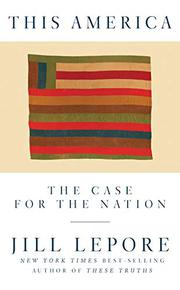
Following her impressive one-volume history of the United
States, These Truths (2018), the acclaimed historian delivers
a sharp, short history of nationalism, which she describes as “a contrivance,
an artifice, a fiction.”
As New Yorker staff writer Lepore (American
History/Harvard Univ.) notes, the term wasn’t even used until the 19th century.
In 1830s America, it was called sectionalism, and its adherents included those
who favored slavery and native tribes who didn’t recognize the government. By the
1880s, nationalism was fed by Jim Crow laws, the Chinese Exclusion Act, the
Dawes Act, and the Supreme Court ruling that Native Americans had no birthright
to citizenship. The author clearly shows that, while patriotism is
characterized by love of your home and people, nationalism features hatred of
other countries and immigrants as well as those who are different at home.
“Immigration policy is a topic for political debate; reasonable people
disagree,” writes Lepore. “But hating immigrants, as if they were lesser
humans, is a form of nationalism that has nothing to do with patriotism and
much to do with racism.” Furthermore, she writes, “confusing nationalism and
patriotism is not always innocent.” The author also takes her fellow historians
to task for missing the resurgence of nationalism following World War II.
Though there was a comparatively brief lull in the 1930s, with the 1954 Brown
v. Board of Education decision, the nation fell apart. Churches were
bombed, civil rights leaders were harassed and even killed, and the Ku Klux
Klan reappeared. Hopes rose with the 1964 Civil Rights Act, the 1965
Immigration Act, and the Voting Rights Act, and in the 1980s, nationalism in
the U.S. was all but dead. However, it continued to thrive in Bosnia and Rwanda
and has carried over to Russia, Turkey, Poland, Hungary, and the Philippines.
Lepore writes that while global trade, immigration reform, and the internet
were supposed to end divisions, nationalism has surged; now we have politics of
identity rather than nationality.
A frank, well-written look at the dangers we face. We ignore
them at our peril.






Add comment