
 kirkusreviews.com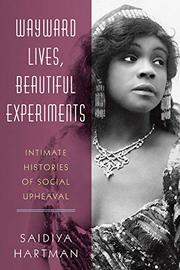
A provocative study of urban African-American women a century
and more ago.
Characterizing her work as an “account of the wayward,” literary
scholar Hartman (English/Columbia Univ.; Lose Your Mother: A Journey
Along the Atlantic Slave Route, 2007, etc.) examines the many ways in which
(mostly) young black women tried to live their lives within the confines of new
urban enclaves such as Harlem and West Philadelphia, from which Italian and
Jewish immigrants had moved on and into which newcomers from the South were
streaming. The population, writes the author, was young and in many cases
disproportionately female, with liberating follow-on consequences. In one
Philadelphia area, for instance, “more than half the women in the ward were
single, widowed, or separated, and this imperiled the newly fledged black
family”—imperiled it because so many of those unencumbered women were
determined to live on their own terms, having begun a journey to freedom that
was ongoing. They faced formidable resistance within their own communities even
as they willingly took on new roles: “In bed,” Hartman writes of one lesbian
couple, “it seemed like it was only the two of them in the world, in the vast
stillness of the deep of night. In the few hours before dusk, there were no
husbands to fear.” The author populates her pages with reformatory inmates,
reformers, sex workers, and political activists such as Harlem Renaissance
figure Claude McKay, “known less well for his indiscretions than for the ease
and facility with which he cloaked them.” Sometimes Hartman’s rhetoric becomes
a touch too high-flown, as if swept up in the exuberance of the fight for
freedom, and interrogatives sometimes threaten to overwhelm declarative
sentences. However, close attention to “beautiful experiments” and “the sexual
geography of the black belt,” as two section titles have it, yield new insight
into the truth of a central proposition: “No modern intelligent person was
content merely existing. Sometimes it was good to take a chance.”
Lucid and original—of considerable interest to students of the
African-American diaspora and American social and cultural history.



Add comment